SyndicatedBusiness
To tax or not to tax: Two towns consider a local option tax this November
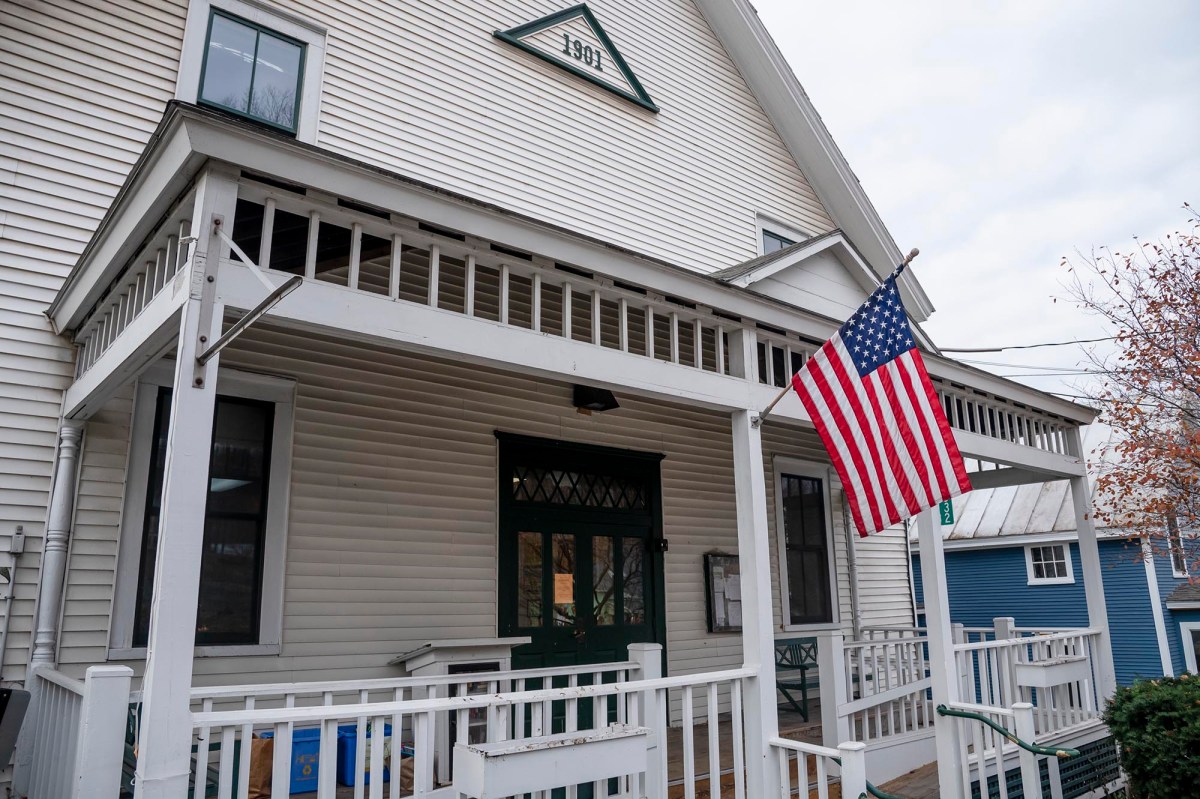
Hinesburg Town Hall seen on Tuesday, November 9, 2021. Photo by Glenn Russell/VTDigger

Hinesburg Town Hall seen on Tuesday, November 9, 2021. Photo by Glenn Russell/VTDigger
" data-image-caption="Hinesburg Town Hall seen on Tuesday, November 9, 2021. Photo by Glenn Russell/VTDigger
" data-large-file="https://vtdigger.org/wp-content/uploads/2021/11/hinesburg-1-20211109-1200x799.jpg" /> Hinesburg Town Hall seen on Tuesday, November 9, 2021. Photo by Glenn Russell/VTDigger
" data-image-caption="Hinesburg Town Hall seen on Tuesday, November 9, 2021. Photo by Glenn Russell/VTDigger
" data-large-file="https://vtdigger.org/wp-content/uploads/2021/11/hinesburg-1-20211109-1200x799.jpg" src="https://vtdigger.org/wp-content/uploads/2021/11/hinesburg-1-20211109-1200x799.jpg" alt="" class="wp-image-530583" srcset="https://vtdigger.org/wp-content/uploads/2021/11/hinesburg-1-20211109-1200x799.jpg 1200w, https://vtdigger.org/wp-content/uploads/2021/11/hinesburg-1-20211109-300x200.jpg 300w, https://vtdigger.org/wp-content/uploads/2021/11/hinesburg-1-20211109-125x83.jpg 125w, https://vtdigger.org/wp-content/uploads/2021/11/hinesburg-1-20211109-768x511.jpg 768w, https://vtdigger.org/wp-content/uploads/2021/11/hinesburg-1-20211109-1536x1022.jpg 1536w, https://vtdigger.org/wp-content/uploads/2021/11/hinesburg-1-20211109.jpg 2000w" sizes="(max-width: 1200px) 100vw, 1200px" />
Stowe’s highway foreman was driving this summer when he came upon an unpleasant sight: a hole in the deck of the Weeks Hill Road bridge.
Many Vermont towns would need to wait a long time to access state funding for bridge repairs, Will Fricke, Stowe’s assistant city manager, said.
But Stowe had a revenue source tucked away.
“Because of local option taxes, we were lucky enough to, you know, have those capital reserves in order to fix that bridge ourselves,” said Fricke, who is hoping to have the bridge construction completed by Thanksgiving.
In the past 20 years, local option taxes have become increasingly popular in municipalities across Vermont. These taxes can be adopted in three different ways. Municipalities can choose to add a 1% tax on top of the 6% state sales tax, the 9% state meals and rooms tax and the 10% state alcoholic beverage tax. The meals and alcoholic beverages tax must be applied together, according to the Vermont government website.
The tax increase proposals come with no shortage of controversy.
The taxes are touted by many city officials as a way to generate revenue, stabilize property taxes and balance out tourists’ impacts on infrastructure and services. Opponents worry about the effects on local businesses and residents and wonder if the proposals will be as effective in towns with smaller tourist presences. This November, Hinesburg and Bennington will both vote on a local option tax for sales, rooms and meals and alcohol in their communities.
The price to sustain a city is only getting higher, said Joy Dubin Grossman, Hinesburg’s assistant town manager. These taxes are an “additional lever” that the town can use to fund necessary services and projects, she said, so it will have less need to increase property taxes.
In Hinesburg, the town estimates that the local option tax could generate between $275,000 and $330,000 in revenue annually. The town would use the revenue for public safety, infrastructure and decreasing reliance on property taxes.
Hinesburg’s local option tax was a topic of discussion in a recent town meeting, according to the Hinesburg Record. Aaron Miller, a meeting attendee, said in an interview that he could see the benefits. Still, he said he would like more clarification on the amount of tax revenue coming from visitors as opposed to community members.
“I mean, obviously, Hinesburg is not Stowe, and so our ability to raise that sales tax or meals and rooms in significant amounts is much lower,” Miller said.
In Bennington, the local option tax would apply to sales, meals and alcoholic beverages and rooms, according to their proposed policy. The selectboard estimates that the tax will bring in about $1.8 million in additional revenue. The proposal requires at least 50% of annual revenue to go toward stabilizing the local property tax rate, increasing to 89% in fiscal year 2027-2028.
The idea has been controversial in Bennington, according to Jonah Spivak, the town’s communications coordinator.
A preliminary poll conducted in Bennington showed support for the local option tax, Spivak said, with 40% of people indicating they would vote yes and 18% of people saying they would likely vote yes. But around 90% of the respondents were property owners in the community, which means they’d experience more direct property tax relief, he said.
“People are asking, ‘Well, what’s in it for those who are not property taxpayers?’” Spivak said.
But Gordon Black, Manchester’s town assessor and economic development officer, has lived and worked in both Bennington and Manchester and seen the impacts of Manchester’s local option tax since its implementation.
From July 1, 2024, to June 30, 2025, Manchester’s local option tax generated $1,737,618 for the town, according to the Manchester Journal. The town was able to decrease overall property taxes for fiscal year 2026.
Black said the tax can be especially impactful in communities with significant tourist traffic such as Manchester, but there could also be powerful impacts in Bennington due to its large department and grocery stores.
“If you go to the Walmart, or you go to any of the grocery stores or Home Depot, there are a lot of New York cars and frequently Massachusetts cars there,” Black said. “So people come from everywhere to go to those larger stores.”
Black added that the perception that renters would not benefit is largely skewed, since higher property tax rates for landlords translate into higher rents.
“They’re paying for that higher property tax, no question about it,” Black said.
In Stowe, Fricke said the local option tax has helped the town repair infrastructure. If it embarks on a large project, Fricke said Stowe can utilize that revenue instead of taxes spiking for a year.
The biggest project that Stowe has been able to accomplish is a large-scale improvement of the sidewalks on its main street, and a project that placed the street’s power lines underground.
Wilmington’s selectboard took a different approach to infrastructure repair this year, awarding $50,000 to businesses in their town center who took revenue hits this summer due to road construction, according to the Deerfield Valley News. Businesses might also need extra help in 2029, when a planned bridge replacement will close Route 9.
Stowe passed a local option sales tax in addition to its meals and rooms tax in 2023, which Fricke said is directed to the general fund to alleviate property taxes.
Montpelier has seen positive results since the implementation of a local option tax in 2025, according to Finance Director Heather Graves. In fiscal year 2027, it will be used to provide tax relief to Montpelier’s residents, she said, and it has helped the city purchase essential equipment like a new ambulance.
Miller, the Hinesburg resident who spoke at a recent meeting, said data about visitor spending versus resident spending would make this an easier decision for Hinesburg, but the absence of that information complicates things.
“I think Hinesburg will ultimately end up needing to make an imperfect decision,” Miller said.
Read the story on VTDigger here: To tax or not to tax: Two towns consider a local option tax this November.