SyndicatedGovernment
Federal court says U.S. agents can search phones at Vermont’s border with Canada without suspicion
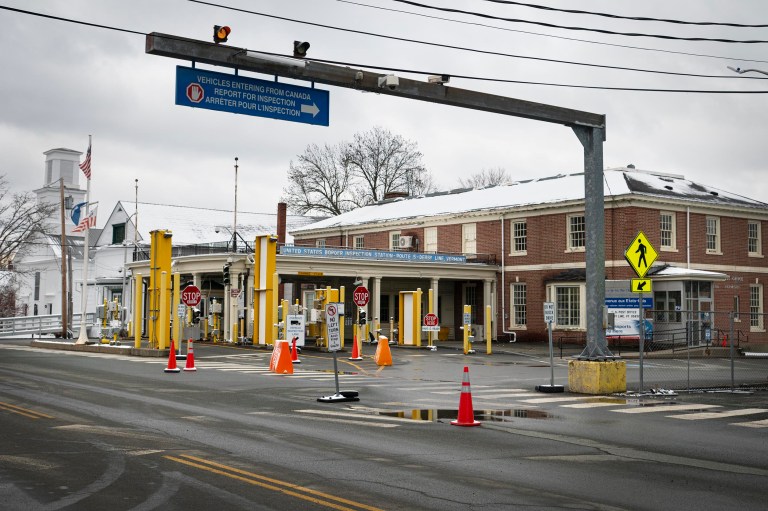
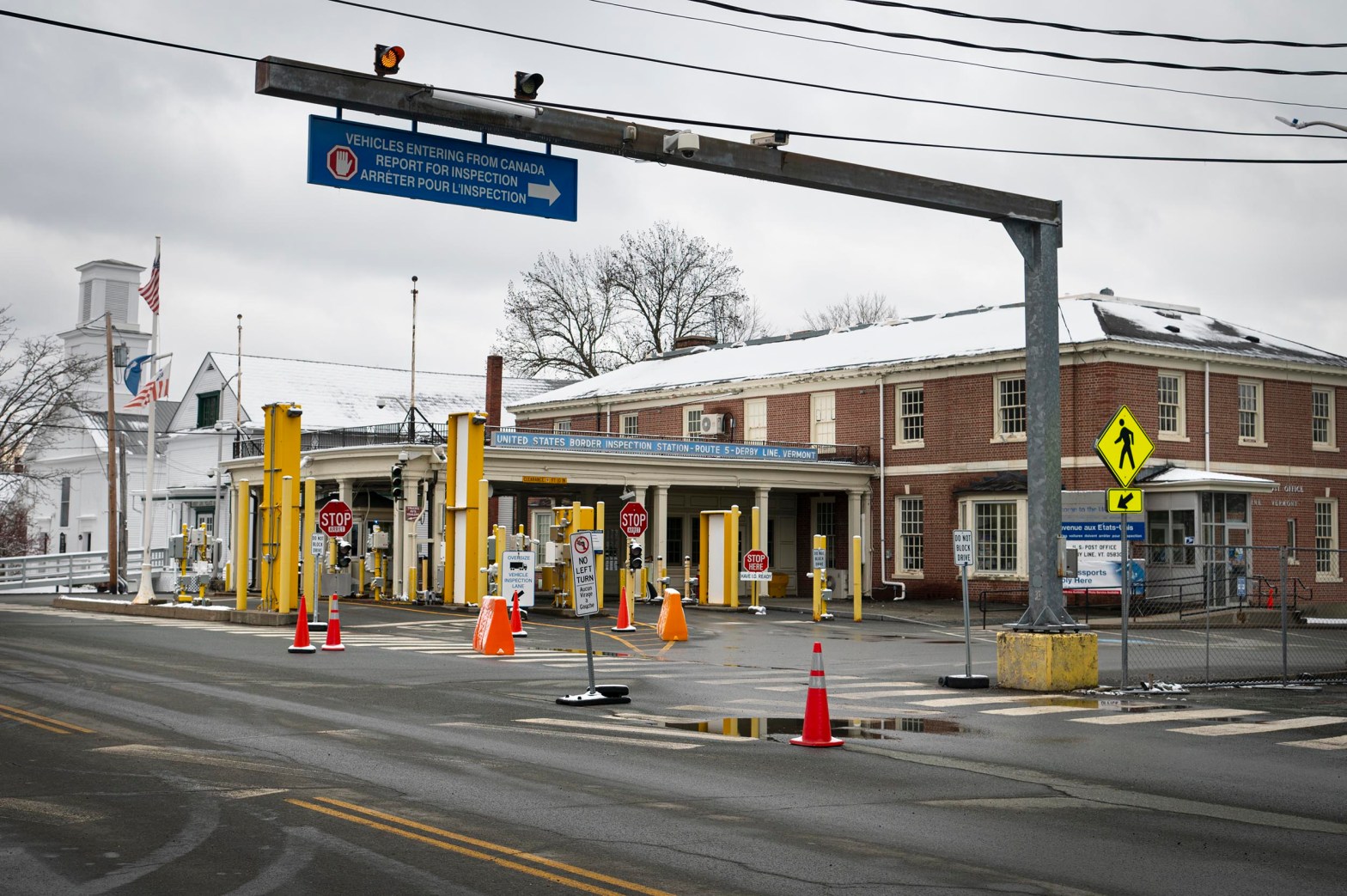
The United States Border Inspection Station in Derby Line on Friday, March 21, 2025. Photo by Glenn Russell/VTDigger
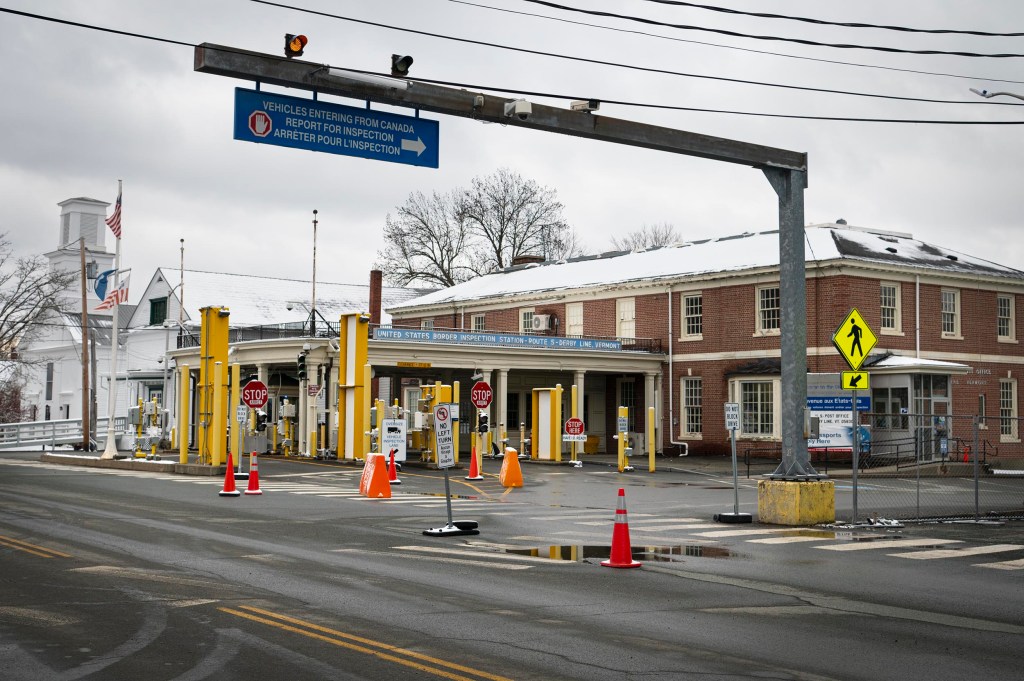
The United States Border Inspection Station in Derby Line on Friday, March 21, 2025. Photo by Glenn Russell/VTDigger
" data-large-file="https://vtdigger.org/wp-content/uploads/2025/03/US-canada-border-3-20250321-1200x798.jpg" /> The United States Border Inspection Station in Derby Line on Friday, March 21, 2025. Photo by Glenn Russell/VTDigger
" data-large-file="https://vtdigger.org/wp-content/uploads/2025/03/US-canada-border-3-20250321-1200x798.jpg" src="https://vtdigger.org/wp-content/uploads/2025/03/US-canada-border-3-20250321-1200x798.jpg" alt="Road border crossing with multiple lanes and stop signs, surrounded by traffic cones and a nearby brick building, under a cloudy sky." class="wp-image-618602" srcset="https://vtdigger.org/wp-content/uploads/2025/03/US-canada-border-3-20250321-1200x798.jpg 1200w, https://vtdigger.org/wp-content/uploads/2025/03/US-canada-border-3-20250321-300x200.jpg 300w, https://vtdigger.org/wp-content/uploads/2025/03/US-canada-border-3-20250321-125x83.jpg 125w, https://vtdigger.org/wp-content/uploads/2025/03/US-canada-border-3-20250321-768x511.jpg 768w, https://vtdigger.org/wp-content/uploads/2025/03/US-canada-border-3-20250321-1536x1022.jpg 1536w, https://vtdigger.org/wp-content/uploads/2025/03/US-canada-border-3-20250321-2048x1362.jpg 2048w, https://vtdigger.org/wp-content/uploads/2025/03/US-canada-border-3-20250321-1024x681.jpg 1024w, https://vtdigger.org/wp-content/uploads/2025/03/US-canada-border-3-20250321-1568x1043.jpg 1568w, https://vtdigger.org/wp-content/uploads/2025/03/US-canada-border-3-20250321-2000x1330.jpg 2000w, https://vtdigger.org/wp-content/uploads/2025/03/US-canada-border-3-20250321-400x266.jpg 400w, https://vtdigger.org/wp-content/uploads/2025/03/US-canada-border-3-20250321-706x470.jpg 706w" sizes="(max-width: 1200px) 100vw, 1200px" />
U.S. border agents can search people’s phones and other electronic devices without a warrant or any suspicion they’ve committed a crime, the federal appeals court covering Vermont ruled last month.
The decision by the U.S. Court of Appeals for the 2nd Circuit, which also covers New York and Connecticut, stemmed from a bank fraud and money laundering case against a man in New York City in 2024. The man was arrested on those charges, and later convicted, after federal agents at a New York City airport garnered incriminating evidence by twice searching his phone when he was returning from trips abroad.
The man was appealing his conviction and, specifically, how a lower court rejected his attempt to bar the evidence garnered from his phone from being used at trial.
Writing in the 2nd Circuit’s majority opinion, Judge Steven J. Menashi said that border agents in that instance and others can “manually” look through someone’s phone or other device without needing to give a reason. He said there should be no distinction between a phone and other types of property, equating it to luggage or a notebook.
“Because a cellphone is property, our precedents establish that the government does not need to have reasonable suspicion before searching a traveler’s cellphone at the border,” he wrote.
Menashi was appointed to his post by President Donald Trump. His 2019 appointment was controversial, because he worked, at the time, as a lawyer in Trump’s first administration. Menashi was joined in the majority opinion by a judge appointed by former President Joe Biden. Another Biden appointee wrote a concurring opinion, though it included some caveats.
The federal government has long had broad authority to search people’s belongings when entering the country, even if they’re U.S. citizens. The regular privacy protections afforded by the Fourth Amendment do not apply at the border in the way they would in most other locations. Immigration agents also have some, but not the same, expanded authority within 100 miles of the border — which includes almost all of Vermont.
The number of cellphone searches at the border hit a record high of about 15,000, though, after Trump took office for a second time last year and launched a crackdown on border security, according to the technology magazine Wired.
U.S. Customs and Border Protection says on its website that officers may search through people’s devices “on rare occasions.” The practice has been used to identify drug and human smuggling, digital contraband and other criminal activities, it says, and can be “integral to determining an individual’s intentions upon entry to the United States.”
Until now, the 2nd Circuit had not ruled on whether border agents needed to give at least some reason for combing through people’s devices. Other appeals courts around the country, which are divided into geographic regions, have taken up the question before. All have concluded border agents don’t need a warrant to search someone’s phone, broadly, though the details of the rulings have varied.
Last month’s ruling applies to any port of entry within the 2nd Circuit’s jurisdiction, such as those along Vermont’s border with Canada. It focuses on “manual” searches, which would generally mean an agent scrolling through someone’s phone while they were present, Scott Wilkens, senior counsel at the Knight First Amendment Institute at Columbia University, told VTDigger.
If someone isn’t willing to hand over their phone to agents unlocked, officials could confiscate the phone and then use digital tools to extract information from it, Wilkens said. The judges did not rule on whether some degree of suspicion was needed to conduct that kind of more involved search, according to the decision.
The Knight Institute filed an amicus brief urging the 2nd Circuit judges to require a higher standard of suspicion for even manual device searches, specifically citing the need to protect journalists who are entering the country.
Wilkens criticized the ruling in an interview. He said it doesn’t make sense for the court to equate cellphones or laptops with other types of property because of the massive amount of data and information they hold.
“That clearly cannot be right,” he said. “It’s a vast trove of information — highly personal information. I think this decision does not take that seriously.”
Even though suspicionless device searches already take place at the border today, Wilkens said he worries the ruling could embolden federal agents to conduct more such searches in Vermont and other states going forward.
In the same vein, that could discourage people who have plans to travel from speaking as freely as the First Amendment allows them to, he said, out of fear the government would find something on their device it didn’t like.
“It will chill the speech of those who are — rightly — concerned about government searches of their devices whenever they cross the border,” he said.
Last month’s ruling could be appealed to the U.S. Supreme Court next, Wilkens said, though he was not sure if that would happen. He said it’s likely, regardless, that the high court would take up the issue in some capacity in the coming years.
Read the story on VTDigger here: Federal court says U.S. agents can search phones at Vermont’s border with Canada without suspicion.